Can AI-Powered Media Pitches Outperform Traditional Ones
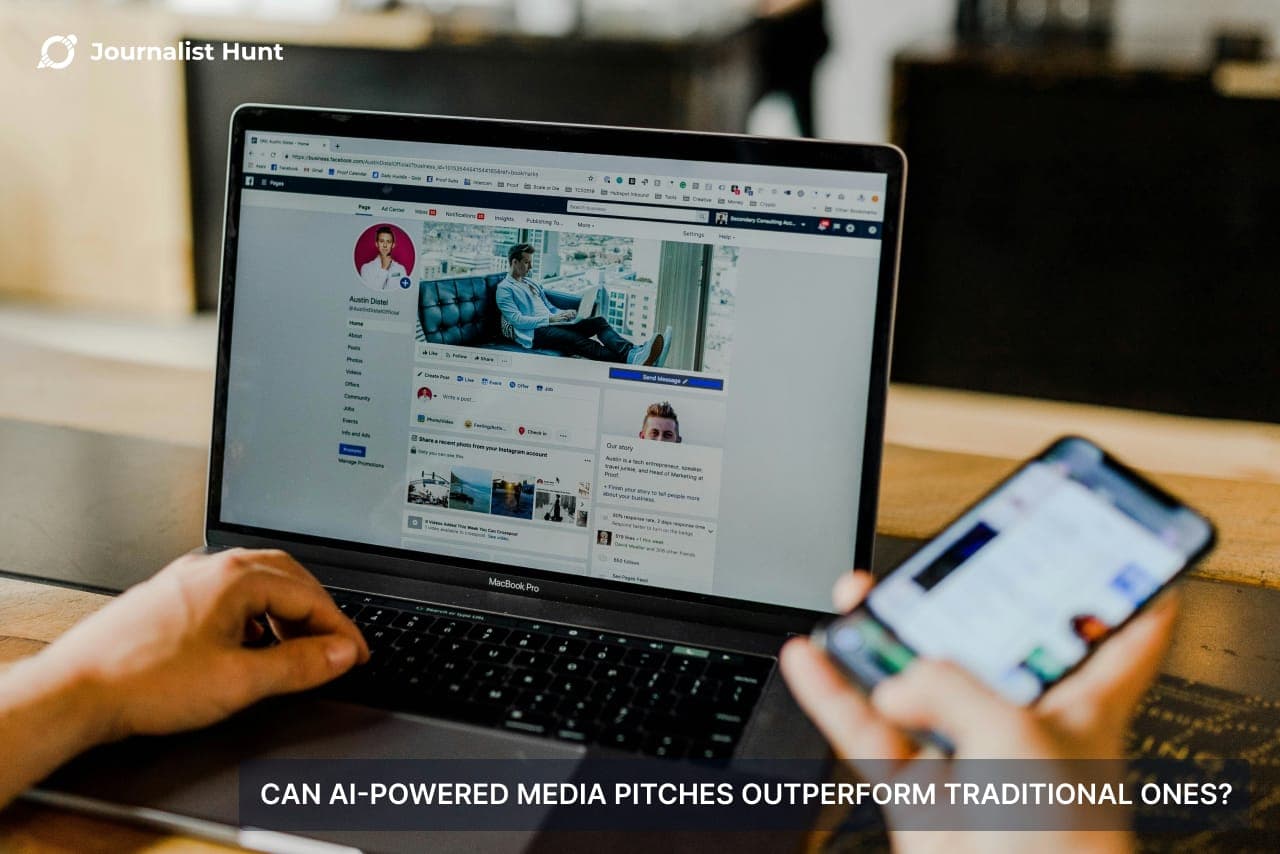
The AI boom has affected quite a lot of industries. Let it be food, modeling, or even transport. Every niche is now enhanced through AI but, the main question lies:
Has the AI boom also impacted the media world? Can AI write better media pitches than a human?
We’d say, Yes and No!
Even with AI, balancing automation with authenticity will always be a challenge. AI can help streamline the process, but media pitching is more than just churning out emails.
To help you understand those top-class secrets about media pitching, here’s a detailed guide on the impact of AI and how to stand out in the media industry.
Can AI-Powered Media Pitches Outperform Traditional Ones?

The answer is yes, but it depends on how you use AI.
AI-powered media pitches have the potential to outperform traditional ones through data-driven insights, personalization at scale, and of course, lightning-fast execution.
On the opposite side, traditional media pitches rely heavily on manual research and human intuition. This could be prone to bias.
For instance, AI tools can create pitches optimized for specific journalists based on their past work, preferred topics, and engagement patterns. Meanwhile, sentiment analysis and predictive analytics help PR professionals refine their messaging for maximum impact.
It all sounds really easy and highly effective, right?
But here’s the catch.
Journalists know about AI emails, and they hate it. Honestly, no one likes to chat with a robot instead of the CEO, especially in the media world.
AI excels at processing data and optimizing outreach, but it cannot fully replicate the emotional intelligence and creativity that PR professionals bring to the table.
In short, when AI is used to complement human efforts rather than replace them, media pitches can be smarter, faster, and more effective than traditional ones. The key is striking the right balance between data-driven insights and the human touch.
How To Choose The Right Approach For Your Business?
Well, there’s no one-liner answer for that.
If your business already has strong relationships with media outlets or targets sensitive stories, you don’t need to use AI tools.
But, it’s not a one-size-fits-all decision, different situations call for different strategies. Let’s break it down with a simple table to help you decide:
| Scenario | Recommended Approach | Why It Works |
|---|---|---|
| You need to send pitches to many journalists quickly. | AI-Powered | AI tools can analyze data fast and send personalized pitches at scale, saving time and effort. |
| You have a strong personal relationship with journalists. | Traditional | A personal, human connection is more impactful for one-on-one communication. |
| You’re new to PR and need guidance. | AI-Powered | AI tools can provide templates, suggest ideas, and guide you in crafting effective pitches. |
| Your pitch involves sensitive or emotional stories. | Traditional | A human touch ensures the story feels genuine and resonates on an emotional level. |
| Your budget is limited, but you need results. | AI-Powered | AI tools can do the work of a larger PR team, making it cost-effective while maintaining quality. |
Why AI Media Pitches Are Becoming a Norm?

The use of AI in media pitches is no longer a futuristic concept, it’s becoming an industry standard.
Businesses and PR professionals are turning to AI-powered solutions but there’s always a question. Why?
Why should founders adopt AI pitches and what’s the reason for them becoming a norm?
Here are 5 key reasons that AI media pitches are becoming the new trend in media pitching.
1. More Accuracy
AI tools, for many founders, act as the pinnacle of accuracy in the shortest time. And, there's some truth to that.
With AI tools, you can improve workflows such as researching journalists and gathering relevant data. These platforms can scan a journalist’s previous articles, social media activity, and editorial preferences to identify the best targets for a pitch.
For instance, tools like Upheal use AI algorithms to match your content with the right journalists, ensuring you’re not wasting time on irrelevant leads.
Beyond targeting, AI enhances pitch content. It can optimize subject lines, suggest key phrases to grab attention, and even recommend adjustments to improve tone and relevance.
2. Personalized Tone and Research

Personalization always seems time-consuming when doing mass media pitching.
And that's where AI shines. Advanced AI tools, especially premium ones, can analyze a journalist’s preferences, past work, and audience engagement.
For example, some AI platforms use NLP to create customized email drafts that reflect the journalist’s tone of voice or align with their coverage areas.
3. Staying Competitive
In such a fast-paced digital media world, competition is unavoidable. As more PR professionals and businesses adopt AI-powered tools, it’s impossible to ignore AI and stick with those traditional approaches. AI enables companies to pitch faster, smarter, and more strategically, helping them stay ahead of their competitors.
For example, imagine two companies pitching the same journalist. One uses AI to create a personalized, timely pitch, while the other relies on generic templates. The journalist is far more likely to respond to the AI-enhanced pitch because it’s tailored and relevant.
4. Cost-Effectiveness
AI tools come with hefty price tags.
But, after doing the math, are they still that expensive when compared with maintaining a large, experienced PR team?
No!
Traditional PR requires hiring multiple specialists, including researchers, writers, and outreach professionals, which can quickly add up in costs. In contrast, a single AI-powered tool can perform many of these tasks at a fraction of the expense.
Take this example: A mid-sized business might spend $150,000 annually on a full PR team, including salaries and benefits. Alternatively, they could invest in an AI platform for $10,000–$20,000 per year.
Plus, AI doesn’t require training, onboarding, or downtime. Once implemented, it operates 24/7, continuously refining its processes through machine learning.
For startups and small businesses with limited budgets, AI provides access to tools and strategies that were previously reserved for larger organizations.
5. Better Efficiency
Efficiency is another reason why AI is becoming the norm in media pitches. Traditional PR methods can be slow and labor-intensive and need hours of research, writing, and follow-up.
AI, on the other hand, streamlines these tasks, allowing PR professionals to focus on strategy and creativity.
For instance, AI can automate repetitive tasks like tracking email opens, scheduling follow-ups, and analyzing campaign performance.
This level of automation reduces the time spent on manual tasks and ensures no opportunities are missed. As a result, PR teams can handle more pitches in less time, increasing their overall productivity.
Is AI The Answer To All Media Pitching Problems?
Despite those dozens of advantages that come with AI-powered media pitches, it’s far from a perfect solution. In fact, AI-driven pitches can create problems that traditional methods don’t.
One of the biggest downsides is the lack of genuine human connection. Journalists often value authenticity and a personal touch in pitches. AI-generated emails, even when well-crafted, can feel robotic or overly formulaic.
Another problem is over-reliance on automation. As a founder, never think that AI tools can handle everything, neglecting the need for strategic thinking and relationship-building.
Plus, we really don’t want to see your email published on Twitter and labeled by a journalist as “Fun To Read Mail List 2025”.
Wrapping It Up – Here’s What We Think!
AI-powered media pitching is undeniably transforming the PR landscape. It enables businesses to scale their outreach, save costs, and stay competitive in a fast-paced industry.
But, we should also know that AI is not a magic bullet for all pitching problems. Its inability to replicate genuine human connection, occasional personalization errors, and over-reliance on automation can alienate journalists and destroy relationship-building.
The future of media pitching lies in finding the perfect balance between AI’s strengths and the irreplaceable human touch